Quick answer
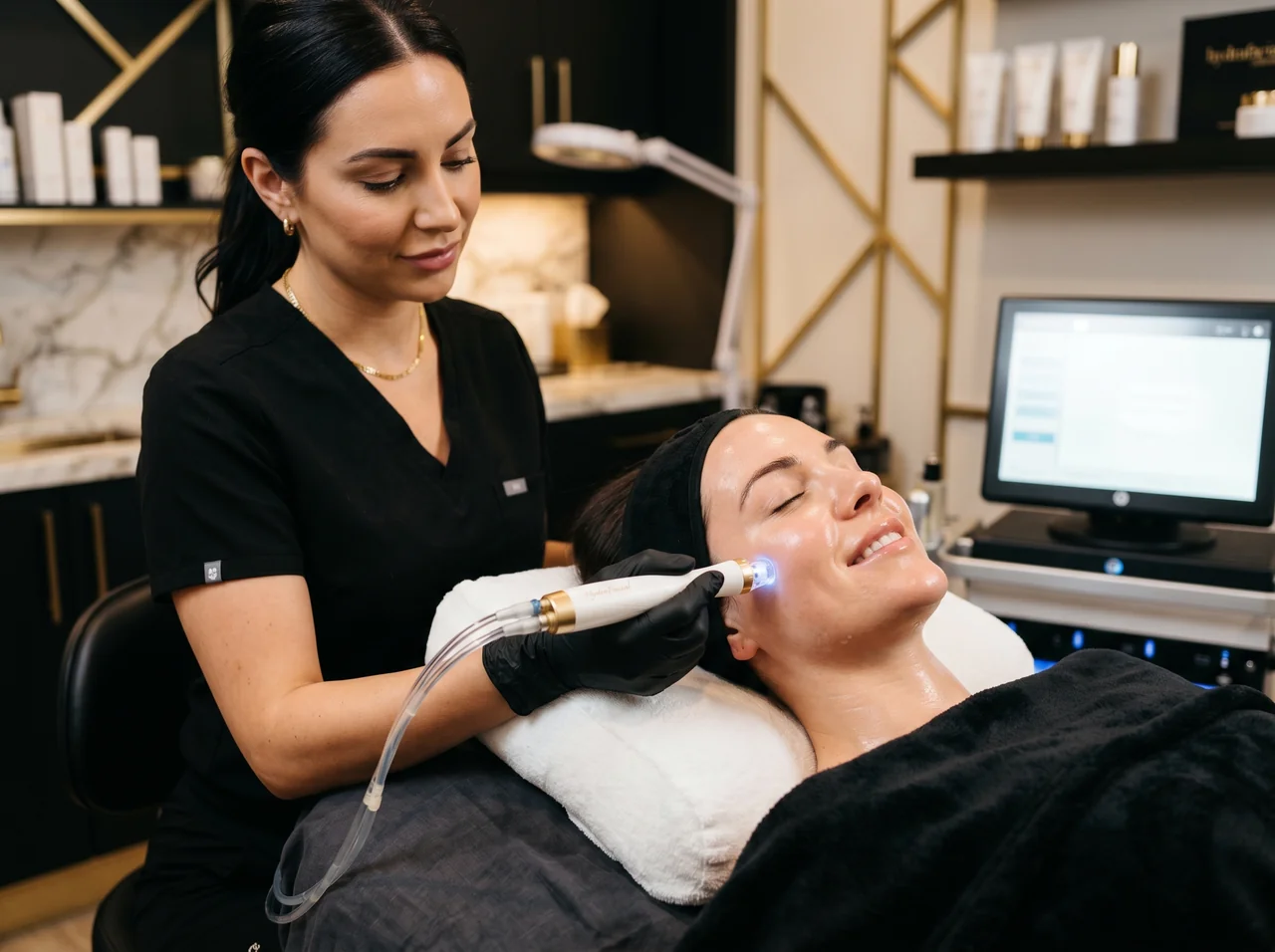
Dermaplaning uses a sterile surgical blade to gently remove dead skin cells and fine peach fuzz, leaving skin instantly smoother and brighter, with no downtime. Hair does not grow back thicker or darker. It is not ideal over active acne. At Blissful Touch it is paired with a HydraFacial in one 60-minute visit, and most people repeat it every 3 to 4 weeks.
Key takeaways
- Dermaplaning removes dead skin and vellus hair (peach fuzz) for smoother, brighter skin.
- Hair does not grow back thicker or darker; this is a myth.
- Makeup goes on more smoothly and skincare absorbs better afterwards.
- No downtime, but avoid it over active breakouts, sunburn or very sensitive skin.
- Pairing dermaplaning with a HydraFacial gives exfoliation plus deep hydration.
On this page
What is dermaplaning?
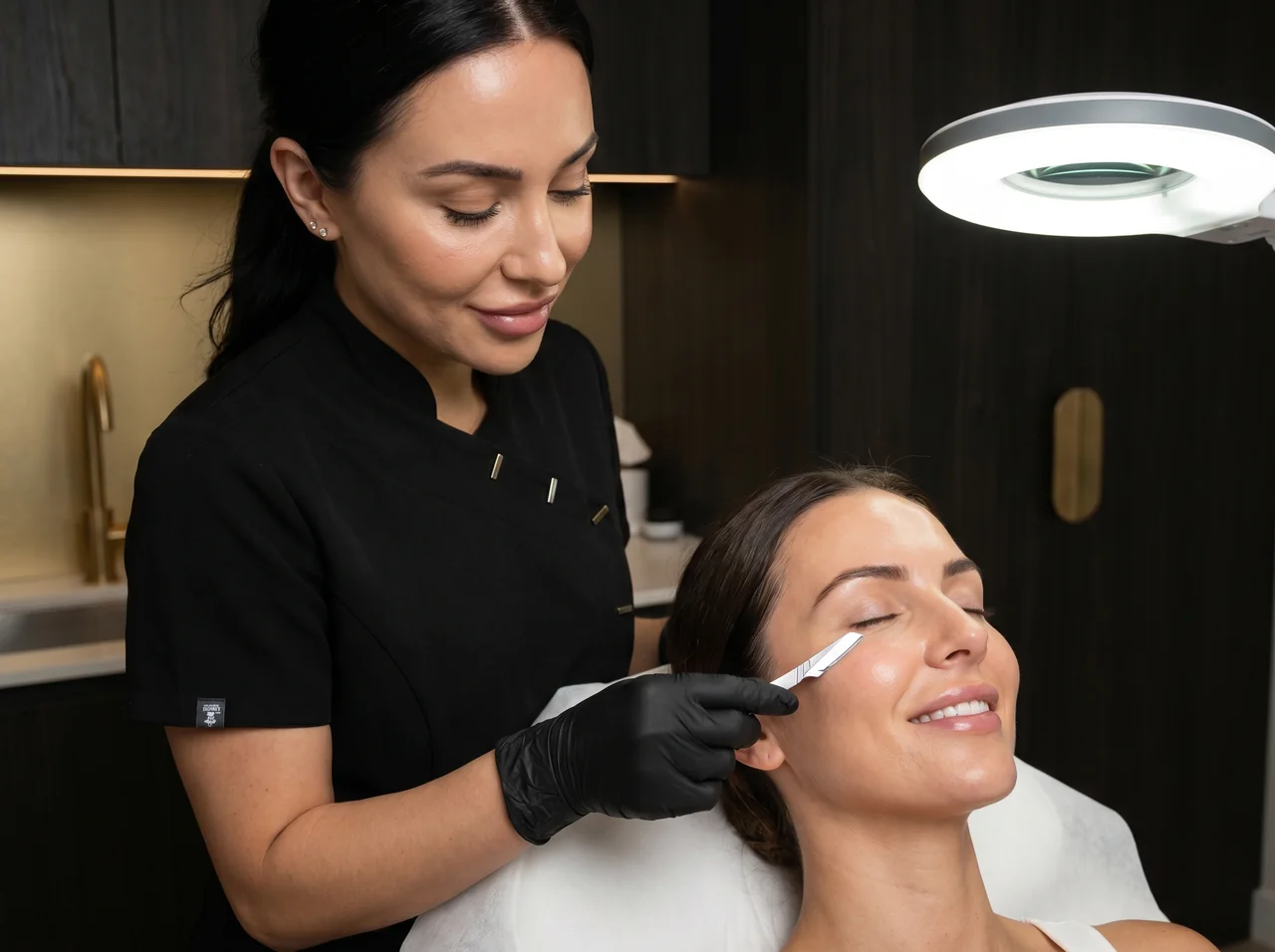
Dermaplaning is a gentle form of manual exfoliation. A trained professional holds a sterile, single-use blade at a careful angle and uses short, light strokes across the skin. This lifts away the top layer of dead skin cells along with vellus hair, the fine, soft "peach fuzz" that traps oil and makes makeup look cakey.
At Blissful Touch, dermaplaning is offered together with a HydraFacial in one 60-minute visit, so you get exfoliation, extraction and deep hydration in one appointment.
Benefits of dermaplaning
- Instant smoothness: you can feel the difference right away
- Brighter skin: removing dead cells reveals a fresher surface
- Flawless makeup: foundation glides on without clinging to fuzz
- Better skincare absorption: serums can reach the skin more easily
- No downtime: you can go straight back to work or an event
Dermaplaning pros and cons
Pros
- Instantly smoother, brighter skin
- Removes peach fuzz, so makeup looks flawless
- Helps skincare products absorb better
- No downtime; suitable before events
- Painless and relaxing for most people
Cons
- Results last about 3 to 4 weeks
- Not suitable over active, inflamed acne
- Can be too much for very sensitive or reactive skin
- Does not treat deep scars, pigmentation or wrinkles
- At-home versions carry a higher risk of nicks and irritation
Busting the common myths
Myth 1: Hair grows back thicker and darker
False. Cutting a hair at the surface does not change the follicle beneath it. Peach fuzz grows back with the same colour and texture. Regrowth can feel slightly blunt at first because it was cut straight across, but it is not thicker.
Myth 2: Dermaplaning is the same as shaving
Not quite. Shaving only removes hair. Professional dermaplaning uses a specific blade angle to remove dead skin cells as well as hair, with skin prep and aftercare designed for your face.
Myth 3: Dermaplaning causes breakouts
When done professionally on suitable skin, it usually helps reduce congestion. However, it should not be done over active, inflamed acne, because the blade can irritate spots and spread bacteria.
Why pair dermaplaning with a HydraFacial?
The two complement each other perfectly. Dermaplaning removes the dead skin and fuzz; the HydraFacial then cleanses the pores, extracts congestion and floods the fresh surface with hydrating serums. The result is a smoother, glowing, deeply hydrated finish.
At Blissful Touch
Dermaplaning in NE Calgary
See treatment times, what to expect and quick answers on our Dermaplaning page, or book online any time.
What to expect
- Cleanse. Skin is thoroughly cleansed and prepped so every pass is smooth.
- Dermaplane. Gentle, precise strokes exfoliate the surface and remove fine hair.
- Nourish and glow. Hydration and SPF finish the treatment.
Aftercare
- Wear sunscreen every day; fresh skin is more sensitive to UV.
- Avoid retinoids, acids and scrubs for a couple of days.
- Keep makeup light on the day if your skin feels sensitive.
Who is it for?
Dermaplaning suits most skin types, especially dry, dull or mature skin and anyone who wants smoother makeup. It is a popular choice a few days before weddings and events. Check with us first if you have active acne, rosacea flare-ups, sunburn or very sensitive skin.
Bottom line
Dermaplaning is a quick, painless way to get smooth, bright, makeup-ready skin, and no, your hair won't grow back thicker. Paired with a HydraFacial, it's one of our most popular glow treatments.
Frequently asked questions
Will hair grow back thicker after dermaplaning?
No. This is a common myth. Peach fuzz grows back with the same texture and colour as before, because cutting a hair does not change the follicle.
Does dermaplaning hurt?
No. Most people find it relaxing. It feels like a light scraping across the skin.
How often should I get dermaplaning?
About every 3 to 4 weeks, in line with your skin's natural renewal cycle.
Is there downtime after dermaplaning?
Usually none. Skin may look slightly pink for a few hours. Wear sunscreen and avoid strong exfoliants for a couple of days.
Who should avoid dermaplaning?
If you have active acne breakouts, sunburn, a cold sore, or very sensitive skin, check with us first.
Should I dermaplane at home?
Professional dermaplaning uses a sterile blade, the right angle and a proper skin prep, which lowers the risk of nicks, irritation and breakouts. At-home tools are less precise.
This guide is general information, not medical advice. Results vary from person to person. If you have a medical condition, are pregnant or take prescription medication, check with your doctor before any treatment and tell us when you book.

About Blissful Touch
Blissful Touch is a massage and skincare spa at #110, 3565 20th Ave NE in NE Calgary, near Sunridge. Founder Jamilah is a licensed professional and instructor in aesthetics and massage therapy. Meet Jamilah · See all services